Clear need for action in smart building management
A recent ZHAW study shows that despite high expectations, only 35% of buildings use smart building solutions. The newly developed SBM Index Real Estate & Facility Management Switzerland 2025 is at 51 out of 100 points - a signal that there is a need to catch up.
Editorial - January 30, 2026
There is still a lot of catching up to do when it comes to smart building management, as a study shows. (Symbolic image; source: Depositphotos.com)
Smart Building Management (SBM) is seen as the key to increasing energy efficiency, cost-effectiveness and transparency in building operations. However, a recent study by the ZHAW shows that despite high expectations, implementation in practice is often fragmented.
Great potential is recognized
The study is based on an online survey of 478 specialists and managers from real estate, facility management and related functions in Switzerland. 78% of respondents see a high or very high potential for SBM, particularly in terms of increasing efficiency in facility management and reducing energy consumption and CO₂ emissions.
«Smart building management has arrived in practice, but not yet where it could be,» says Prof. Dr. Andrea González, head of the Smart Building Management competence group at the ZHAW. «Many organizations use individual digital solutions without systematically linking or strategically managing them.»
Gap between aspiration and reality
At the same time, there is a clear gap between aspiration and reality: SBM is currently only used in around 35% of known buildings - often selectively and not across portfolios. The level of maturity also remains low in many organizations: isolated solutions predominate, while data-driven, integrated approaches are the exception.
The newly developed SBM Index Real Estate & Facility Management Switzerland 2025 is at 51 out of 100 points: a clear signal that there is a need to catch up. With the SBM Index, the ZHAW has for the first time created an instrument that maps the implementation status of smart building management in a structured and comparable way. It serves as an orientation framework for owners, operators and facility management organizations.
High investment costs as an obstacle
The main obstacles cited by respondents were high investment costs, technical complexity and integration into existing systems. In addition, the benefits of smart building solutions are often not systematically measured. «Without clear target images, measurement concepts and sufficient expertise, the actual added value of smart building management often remains invisible,» says González.
«Our results clearly show that the higher the degree of maturity of the implementation, the more energy savings, efficiency gains and regulatory targets are actually achieved,» the head of the study continues.
Cyberattacks in Switzerland increase by six percent
Check Point Software Technologies has published the Cyber Security Report 2026. In Switzerland, an average of 1138 cyber attacks on organizations were registered per week in 2025 - an increase of six percent compared to the previous year. The telecommunications sector is particularly affected, with 1662 attacks per week.
Editorial - January 29, 2026
The number of cyberattacks in Switzerland has risen again. (Image: Ed Hardie / Unsplash.com)
Check Point Software Technologies has published the 14th edition of its Cyber Security Report. In it, the company's security researchers summarize global developments in cyber attacks in 2025 compared to the previous year. The figures for Switzerland show an increase of six percent, with an average of 1138 attacks targeting organizations and companies per week.
Telecommunications hit hardest
The telecommunications sector is particularly targeted by cyber criminals with 1662 attacks per week. The retail sector is in second place with 1440 attacks per week, followed by public administration with an average of 1336 attacks per week.
«Compared to other countries, with a 14% increase in Germany and a 12% increase in Austria, the figures for Switzerland are almost moderate, but there can be no question of the all-clear,» explains Marco Pierro, Country Manager Switzerland at Check Point Software Technologies. «The threat situation is intensifying with the use of AI by cyber criminals. Swiss organizations and companies are high-value targets for cyber criminals, and the results from the use of integrated campaigns stand out in particular.»
AI-driven cyberattacks on the rise
The report highlights the shift towards integrated attack campaigns across multiple channels. This approach combines deception with machine automation. Globally, companies were exposed to an average of 1968 cyberattacks per week last year - an increase of 18% compared to 2024 and 70% since 2023.
Attackers are using the power of automation and artificial intelligence to move faster in systems, scale more easily and operate across multiple attack surfaces simultaneously. «AI is changing the mechanics of cyberattacks, not just their scope,» explains Lotem Finkelstein, VP of Research at Check Point Software. «We are seeing attackers move from purely manual operations to an ever-increasing level of automation. We are also seeing the first signs of autonomous techniques.»
New attack tactics
The report identifies several key developments: AI is increasingly being integrated into attackers' workflows, accelerating reconnaissance, social engineering and operational decision-making. Over a three-month period, 89 percent of organizations were exposed to high-risk AI requests, with approximately one in 41 requests classified as high-risk.
The ransomware ecosystem has decentralized into smaller, specialized groups, leading to a 53% increase in victims extorted compared to the previous year. The number of new ransomware-as-a-service groups increased by 50 percent. Social engineering is increasingly expanding beyond email. ClickFix techniques have increased by 500 percent in the past year and use fraudulent technical prompts to manipulate users.
Unmonitored edge devices, VPN appliances and IoT systems are increasingly being used as operational relay points to interfere with legitimate network traffic. An analysis conducted by Lakera identified security vulnerabilities in 40 percent of 10,000 MCP (Model Context Protocol) servers examined.
Recommendations for companies
Check Point recommends that companies revise their security foundations for the age of AI. Controls for networks, endpoints, cloud, email and SASE should be reassessed to stop autonomous, coordinated attacks early. It is also important to control and make transparent authorized and unauthorized AI usage.
Security strategies must protect the workspace where human trust and AI-driven automation intersect. Actively inventorying and securing edge devices, VPN appliances and IoT systems will help stop hidden threats. As attacks happen at machine speed, preventative security is essential to stop threats before lateral movement, data loss or extortion occurs.
Embedded AI: Artificial intelligence for decentralized decisions at the network edge
Embedded AI is moving artificial intelligence from the cloud directly to devices at the edge of the network. This development is being driven by energy-saving hardware, local data processing and real-time decision making. Advanced compression and optimization techniques are becoming increasingly indispensable.
Editorial - January 28, 2026
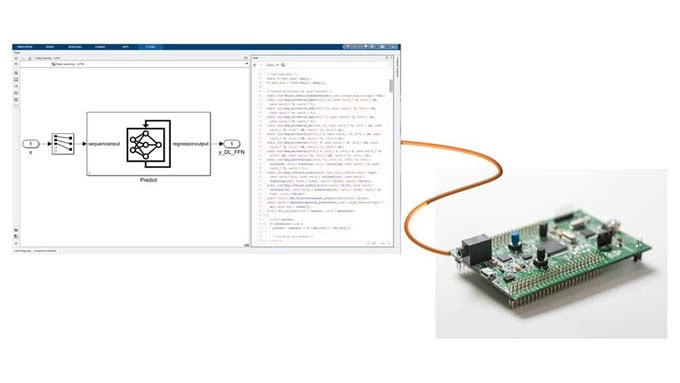
Automatic code generation from Matlab. (Source: MathWorks)
Embedded AI is increasingly becoming a central driver of modern edge systems. With this technology, artificial intelligence is moving from the cloud directly to where it is needed - to the devices at the edge of the network. Embedded hardware with low power consumption ensures cost and energy savings. Local processing protects data and allows offline operation, while edge AI supports real-time decision making with minimal latency. This is required for autonomous systems and industrial automation.
Market growing rapidly thanks to specialized hardware
The market for embedded AI is growing rapidly, driven by specialized hardware components such as neural processing units (NPUs) and heterogeneous architectures that are increasingly being integrated directly into microcontrollers and systems on chips (SoCs). This presents engineers with the challenge of implementing complex models on devices with limited memory and computing resources. Techniques such as quantization, pruning and other methods of model compression are therefore essential. In addition to hardware, powerful libraries and tools are becoming increasingly important in order to make AI reliably usable across different platforms.
A concrete example of this trend is the combination of wake word recognition with object recognition and tracking on Qualcomm Snapdragon platforms. YOLOX-based networks are used for object recognition, with inference outsourced to the Hexagon NPU. The NPU is only activated when necessary if a corresponding wakeword (audio signal) was previously given and this was recognized by a second, more energy-efficient NPU. This approach shows how heterogeneous architectures that combine a low-power NPU with Hexagon DSP enable real-time image processing tasks while maintaining energy efficiency.
Code generation with deep learning. (Source: MathWorks)
Shift Left for smart AI
As the complexity of embedded AI increases, so does the need for clearly structured workflow processes. Model-based design provides a framework for this: Instead of writing low-level code, engineers model their algorithms visually in Simulink. Requirements, models and test artifacts are brought together in a uniform digital thread, which supports collaboration and traceability throughout the entire product life cycle.
A key advantage of this approach is early validation. With the help of hardware-in-the-loop (HIL) and processor-in-the-loop (PIL) tests, potential problems can be identified at an early stage and development can be accelerated, in line with the «shift left» principle. How this approach works can be explained using an example from the automotive industry. In AI-based trajectory planning and control on Infineon AURIX TC4x, neural network controllers are designed and validated using model-based design before deployment. By using a parallel processing unit (PPU) on the hardware, this solution achieves 50 percent higher accuracy and 5 percent energy savings compared to traditional approaches - an example of how structured workflows and hardware-aware optimization deliver tangible benefits.
From Matlab to the microcontroller
MathWorks provides an integrated environment for developing and deploying AI on embedded systems. Engineers can design and train their models in Matlab or import pre-trained models from frameworks such as PyTorch, TensorFlow and ONNX. Using automatic code generation tools such as Matlab Coder and GPU Coder, these models can be translated into optimized C, C++, CUDA or HDL code for CPUs, GPUs, FPGAs and MCUs. This closes the gap between high-level design and hardware implementation.
Optimization workflows for quantization, pruning and compression are also integrated into the toolchain. They enable use on devices with limited resources without compromising performance. In addition, verification tools such as Polyspace ensure additional reliability by analyzing the generated code statically and dynamically, detecting errors early in the development cycle - or proving their absence. These functions are particularly important in safety-critical areas to ensure compliance and robustness.
A practical example of this workflow is temperature prediction for electric motors on TI C2000 hardware. Virtual sensor models are developed and trained in Matlab or Python, compressed for use and validated using processor-in-the-loop tests. This approach replaces physical sensors with software-based estimators, reducing cost and complexity while maintaining or even increasing accuracy.
Use in numerous application areas
Embedded AI is already being used in numerous areas of application: in healthcare, for example, it is used for real-time signal processing in ECG analysis on STM32 boards. Deep learning and signal processing algorithms are combined here. Sensor data can be processed in real time with the help of automatic C/C++ code generation. Embedded AI solutions are also used in the field of occupational safety: the detection of personal protective equipment on Raspberry Pi and pose detection on Nvidia Jetson platforms show how embedded image processing and GPU acceleration enable compact, powerful AI solutions for monitoring and compliance.
These examples are indicative of a broader trend: embedded AI is no longer a niche technology, but is becoming a standard for intelligent systems in various industries. Through structured workflows and the use of integrated toolchains, engineers can accelerate their development processes, ensure their reliability and optimize performance for edge deployments. As generative AI and advanced workflows move ever closer to the edge, efficient methods and optimization with hardware in mind will be key to realizing their full potential.
MathWorks will be presenting various key topics and application scenarios to engineers and developers at embedded world from March 10 to 12, 2026 in Nuremberg (Hall 4, Booth 110) in a series of technical presentations. Visitors to the stand will gain insights into various demos, including AI-based trajectory planning on Infineon AURIX TC4x, object tracking on Qualcomm Snapdragon, AI-based temperature calculation for electric motors and real-time signal processing on IoT devices.
Five tips for more data protection in everyday life
European Data Protection Day takes place on January 28, 2026. Chester Wisniewski, Director Global Field CTO at Sophos, gives five practical tips for more data security. The focus is on the appeal that every individual can retain control over their personal data.
Editorial - January 23, 2026
Chester Wisniewski, Director Global Field CTO at Sophos. (Image: Sophos)
European Data Protection Day on January 28 has been reminding us of the importance of data protection since 1981. Chester Wisniewski from Sophos uses the occasion to make an appeal: «Data Protection Day should remind us how important encryption is for protecting our data from unwanted espionage and data breaches.» Since the NSA revelations by Edward Snowden almost 13 years ago, the fight for end-to-end encryption has continued, most recently in the dispute over chat control.
Backdoors and excessive access rights are problematic. Numerous American technology companies have been deceived by cyber criminals such as LAPSUS$ and Scattered Spider by posing as law enforcement agencies in order to gain supposedly «legitimate access» to personal data. Encryption makes it possible to share exactly what you want to share with whom and when. If the user is in control, they can share data securely and with their consent.
Select suitable passwords
The Sophos expert first recommends replacing old passwords with new ones, preferably with two-factor authentication (2FA). As there are usually numerous accounts, each with their own passwords, a password manager is a good support for creating and managing all access data. These also protect against fake websites, as they recognize them and do not reveal a password in case of doubt. The 2FA causes hardly any trouble, but is a bigger hurdle for fraudsters.
Check data protection settings
With most operating systems, apps and online accounts, users can decide for themselves how much they want to disclose. Should every app on your smartphone know your current location? Do you want to stay logged into your favorite online account for the sake of convenience? Does the app have permission to publish posts in the user's name on their social media? As there is no overarching settings function for all applications, the only option is to check each account and decide individually what to allow or not.
Do not share anything without permission
This rule should apply to every user of social media: Before posting a photo with other people in it, first ask if it is okay to do so. The information on it could not only influence relationships with family members and employers, but could also inadvertently reveal things like your place of residence, birthday and vacations to cyber criminals, who could use them against you - now or a long time later.
Special care at work
This rule is even stricter at business level: Passing on company data, whether internally, from customers or suppliers, could not only be of great interest to cyber criminals, but could also have legal consequences for the company and your own workplace.
Know your own limits
What is my own data worth to me? With this individual attitude, every request for personal information can be clearly decided. Cost savings, information, convenience, but also contractual or legal safeguards sometimes require more, sometimes less data. It is up to the user to ask and, if in doubt, to say no.
January 28 commemorates the European Data Protection Convention of 1981, the first legally binding intergovernmental data protection agreement and international tool for the protection of personal data.
Artificial intelligence (AI) is playing into the hands of white-collar criminals: they are becoming more professional, striking more often - and causing ever greater financial damage to companies. According to the latest statistics from Allianz Trade, damage to companies caused by all social engineering scams has risen by 60 %.
Editorial - January 21, 2026
AI-generated scams, such as fake president fraud, are on the rise. (Image: Depositphotos.com)
The latest loss statistics from Allianz Trade reveal a clear risk trend: in 2024, financial losses caused by fake resident fraud scams tripled (+200 %), in 2025 they rose by a further 81% - despite a decline in the number of cases. Order fraud is also experiencing a renaissance: with a 139% increase in losses and 61% more cases, this scam has replaced payment fraud as the most common form of social engineering.
Professionalized offenders thanks to AI
«We are seeing a highly dynamic cat-and-mouse game between attackers and companies,» explains Marie-Christine Kragh, Global Head of Fidelity at Allianz Trade. «Thanks to generative AI, fraud attempts are now reaching a level of perfection that leaves little room for doubt, even among trained employees.»
Flawless emails, deceptively genuine deepfake videos and realistic-sounding voice imitations significantly increase the success rate. According to Allianz Trade, the average losses are in the single-digit million range; individual cases reach double-digit millions.
Double strike at the touch of a button: phishing meets social engineering
The barriers to entry for cyber criminals are also falling. «Many perpetrators today hardly need any IT skills,» says Dirk Koch, Certified Ethical Hacker and partner at law firm ByteLaw. «Phishing and vishing tools are cheaply available on the darknet - a combination of technologically supported initial access and manipulative connection communication is often enough to paralyze a company.» Koch speaks of a «checkmate in two moves»: First the compromised system access, then the targeted attack on decision-making and payment processes.
Domestic offenders remain the greatest risk
In addition to external attacks, the threat from within the company is growing. According to Allianz Trade, 65 percent of the largest financial losses in 2025 were caused by internal cases. «The majority of losses can be traced back to employees - an uncomfortable but central truth,» says Kragh. The growing creativity is striking: from misappropriated luxury goods to internal «shop-in-shop» systems.
For CFOs and those responsible for security, there is a clear need for action. Koch recommends a combination of technical, organizational and cultural lines of defence:
Organizational measures: consistent Four-eyes principle, out-of-band confirmations for payment data changes, continuous process analyses.
Responsiveness: Fast incident response structures to enable amounts to be recovered at all.
People as the most critical factor
Despite all the technology, humans remain the central weak point. Social engineering attacks specifically target emotions - authority, pressure or artificially created crisis situations. «The combination of time pressure, emotional triggers and requests to break the rules should set alarm bells ringing,» warns Kragh. An open error culture and clear lines of communication between employees and managers are considered to be the most effective levers for exposing attempts at manipulation at an early stage.
AI burdens and strengthens networks in equal measure
The age of AI brings major challenges for companies' network infrastructure. The good news is that mastering them will open up new opportunities. Opengear, provider of out-of-band management solutions for critical infrastructure protection, takes a closer look at the three most important challenges and opportunities.
Editorial - January 20, 2026
The data traffic generated by AI applications is pushing networks to their limits. (Image: Depositphotos.com)
More and more companies are turning to software-defined networks such as SD-WAN and orchestrating their infrastructure via the cloud to satisfy the performance hunger of AI applications and workloads. But despite progress in these areas, three challenges characterize this new era of connectivity:
Challenge #1: System overload due to high traffic
AI clusters drive energy and bandwidth requirements far beyond conventional limits: a single GPU rack can generate up to 100 kilowatts of thermal power and traffic of tens of terabits per second during data processing, which causes enormous loads on a physical and logical level. Physically, hardware, cabling, power supply and cooling often reach their limits. This results in bandwidth bottlenecks and hotspots, which increase the susceptibility to errors. On a logical level, the massive data traffic overloads network and software infrastructures, resulting in traffic congestion, storage bottlenecks and security risks: Cybersecurity solutions are often not suitable for the high data throughput and are therefore less able to detect anomalies.
Challenge #2: Larger attack surface at the edge
Edge computing and the associated decentralization are the basic prerequisite for the agile use of AI. However, this significantly larger and more distributed IT infrastructure creates a large number of new points of attack for hackers: every sensor, every gateway and every remote server becomes a potential weak point that criminals can use to cause downtimes, for example. Targeted outages at edge locations are particularly popular with cyber criminals to infiltrate central systems while defenders are distracted.
Challenge #3: Cascading failures due to operational overload
Although more and more network management processes are being automated, the workload for administrators is increasing dramatically. Reasons for this include the shortage of skilled workers and the increasing complexity of network infrastructures due to AI and edge applications. The human factor therefore remains a critical weak point that increases the risk of misconfigurations, missed or incorrect updates and reactive maintenance due to operational overload. The two options to mitigate the resulting cascading failures are an even higher degree of automation and the implementation of OOB (out-of-band) solutions.
Dirk Schuma, Sales Manager EMEA North at Opengear (Source: Opengear)
However, artificial intelligence not only poses challenges, but also offers companies new opportunities to increase their efficiency, security and resilience - especially in conjunction with out-of-band networks:
Opportunity #1: Less downtime thanks to predictive analytics
AI-based predictive analysis tools help companies to identify their capacity limits, predict outages and optimize maintenance windows. The age of purely reactive network management is coming to an end. The integration of NetOps automation tools extends these functions by taking over recurring tasks and eliminating configuration errors - two eminent factors in the occurrence of downtimes.
Opportunity #2: Lower MTTR due to self-healing networks
AI is becoming the key to reliable and resilient networks. AI systems now exist that analyze telemetry data, detect anomalies and automatically initiate recovery measures even before users notice a disruption. Intelligent out-of-band solutions complement these capabilities by maintaining a connection to network resources even if the production network fails. Together, AI and OOB solutions thus form the basis for self-healing networks and drastically reduce the mean time to recovery (MTTR).
Opportunity #3: Hybrid models for legacy and AI-native systems
Companies that want to make their network infrastructure fit for the future must reconcile the reliability of legacy networks with the benefits of AI-supported orchestration and monitoring. In this context, true modernization does not mean simply replacing old hardware and software, but rather integrating new solutions into existing ones in a meaningful way. Out-of-band management helps companies to do this by providing a universal control level for legacy and AI-native cutting-edge systems.
„Operating AI systems is hard work for network administrators and puts a strain on hardware and software,“ explains Dirk Schuma, Sales Manager EMEA North at Opengear. „The combination of AI functionality and out-of-band solutions is a real game changer in this context, as it has the potential to significantly increase the resilience of networks.“
On October 31, 2026, the 6th First Aider Symposium will take place at the KKL Lucerne. The event follows an accident from first aid on site to air rescue and rehabilitation. Around 25 exhibitors will present their offerings, while experts will talk about sports injuries, air rescue, rehabilitation and documentation requirements.
Editorial - January 19, 2026
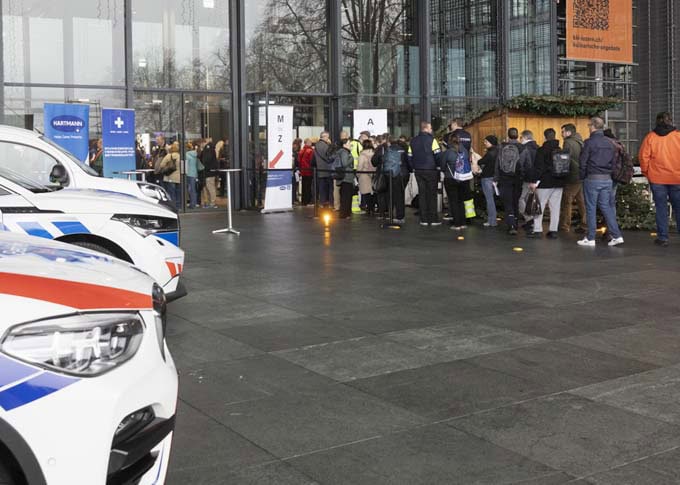
On October 31, 2026, the First Aider Symposium will once again take place at the KKL Lucerne. (Image: Jonas Weibel / First Aider Symposium)
The 6th First Aider Symposium on October 31, 2026 at the KKL Luzern takes a special approach: it follows an accident up close - from first aid on site using the example of a sports injury to air rescue and the sometimes long road back to life. The event is aimed at all first aiders, whether beginners, advanced or professionals, whether Samaritans, company paramedics, safety officers, private individuals or blue light organizations.
First aid for sports injuries
Hanspeter Betschart, Head Physician at the Berit Sports Clinic and Chief Medical Officer of Swiss Olympic, talks about various sports injuries and the necessary first aid. It's not just about professional athletes at major events, but also about common injuries in amateur sport - for example at grassroots tournaments, where many a cruciate ligament has been torn.
Air rescue in rough terrain
Sometimes transportation by helicopter is unavoidable - either because it has to be done very quickly or because there is no other way to the accident site. This applies to hikers, skiers, forestry workers, farmers and many others. Dr. Oliver Reisten, Medical Director of Air Zermatt, explains how an air rescue works and what first aiders can and should do.
The way back to life
First aiders often do not know what happened to the patient once the emergency services have taken over. Dr. Christian Sturzenegger, Chief Medical Officer at the Bellikon Rehabilitation Clinic, looks after patients on their way back home. In his presentation, he uses case studies to explain what happens after an operation in an acute hospital and how patients find their way back into life, family, society and work.
Documentation and data protection
After an incident, first aiders often still have work to do. Especially if an accident happened at work, they should document their first aid. This is best done during the operation with the help of a log, a copy of which they give to the emergency services. However, such logs must not be accessible to everyone. Roger Berger and Bruno Ducceschi from the board of the Swiss Association for Occupational Paramedics (SVBS) explain when first aiders should document their interventions and what they need to pay attention to.
Further training and supporting program
The First Responders Symposium 2026 in the Lucerne Hall of the KKL Luzern places great emphasis on the supporting program and other added value. After each presentation, there will be time and space to ask questions to the speakers. The breaks offer opportunities for discussion and networking, and around 25 exhibitors will also be presenting their products, courses and other services. All presentations will be simultaneously translated from German into French. 3.5 hours will be credited towards the IVR certificate and 2 SGAS continuing education points will be awarded.
Last year, a total of 420 first aiders attended the first aider symposium at the KKL Lucerne. The joint event of the SVBS and IVF Hartmann will take place on October 31, 2026. Further information and registration options are available at first-aid-symposium.ch. The registration deadline is October 24, 2026.
At NRF 2026 in New York, Google will be showing how shopping is moving from a click path to a conversation - and why the next leap will not end with «better search», but with AI assistants that combine discovery, checkout and service in one flow.
Editorial - January 15, 2026
The National Retail Federation (NRF) is regarded as the central stage for the «future of retail» - with a focus on technology, customer experience, omnichannel and efficiency. In this setting, Alphabet and Google CEO Sundar Pichai clearly locates the current platform change as an AI platform shift.
The core of the Google thesis: Shopping is becoming «agentic»
Google's term for this is agentic commerce - AI agents perform tasks on behalf of customers, from product searches to transactions and aftercare. Google CEO Pichai describes a fundamental change: AI Mode shifts the search from keywords to natural conversations, with AI taking over the pre-sorting. Google cites the Shopping Graph with over 50 billion product listings as the database; more than 2 billion of these are updated every hour.
What Google is specifically announcing
1) The Universal Commerce Protocol (UCP): common language
UCP is a new open standard that acts as a common language for AI agents, merchants and payment providers across the entire customer journey. UCP establishes a standard for agents and systems to collaborate across user interfaces, businesses and payment providers. UCP is designed to be cross-industry and compatible with existing protocols such as Agent2Agent (A2A), Agent Payments Protocol (AP2) and the Model Context Protocol (MCP). UCP was developed together with industry leaders such as Shopify, Etsy, Wayfair and Target and is supported by more than 20 other companies in the commerce ecosystem, including American Express, Stripe, Visa and Zalando.
The «Universal Commerce Protocol» (UCP) connects AI Mode/Gemini with the retailer backends and standardizes steps such as discovery, cart, identity, checkout and order - based on APIs and standards such as MCP and A2A.Google wants to make Agentic Commerce scalable with the Universal Commerce Protocol (UCP): An open standard, supported by a broad partner ecosystem of platforms, retailers and payment providers - from Shopify and Walmart to Visa, Stripe and Zalando.
2) Business Agent: Brand chat directly in Google Search
The Business Agent is also new: customers can chat directly with brands in Search - like with a virtual sales consultant, in the «Brand Voice». Activation and customization take place via the Merchant Center; in the future, training with own data, insights, offers and direct purchases are planned.
Google AI Commerce: Business Agent
3) Direct Offers: Offers in AI mode as a new ad play
This new pilot project for Google Ads enables advertisers to present exclusive offers, such as a special discount, directly in AI fashion for customers who are ready to buy. When users ask questions about products (e.g. looking for a carpet for a dining room), the AI can not only suggest suitable products, but also display exclusive offers directly. The display is AI-controlled: with Direct Offers, retailers specify in their campaign settings which offers they want to highlight and the AI decides when an offer is relevant.
Google AI Commerce - Direct Offers
4) Gemini Enterprise for Customer Experience: Shopping + Service as one agent platform
On the cloud side comes Gemini Enterprise for Customer Experience (CX): Google is introducing a central platform that combines shopping and customer service. Based on Google's latest Gemini models, ready-made and configurable AI agents are available there that can be implemented by companies within a few days. These agents can accompany the entire customer lifecycle, from the discovery of new products to solutions for potential problems after the purchase. The focus is shifting from simple chatbots to proactive digital concierges that can independently solve problems and carry out transactions under the supervision of companies. US retailers Lowe's and Kroger are among the first users of these agent tools, while Papa John's is the first company to use Google Cloud's omnichannel ordering agent (Food Ordering Agent).
Vanessa Lee, Shopify
What does this mean for the Swiss retail trade?
Google's NRF story can be boiled down to a simple key question: How do you not only get found in AI interfaces, but how do you get to the conclusion?
1) Product data becomes the «language» of AI
When shopping becomes conversational, classic keyword feeds are no longer enough. Product data must be able to answer questions: What goes with what, what alternative is available, which accessories are compatible - and why is the product the right choice. This is exactly where Google's Merchant Center logic is heading: away from a pure catalog and towards a data foundation that enables consultation in dialog.
2) «Buy where you browse» massively shortens the journey
With UCP and the checkout in AI Mode/Gemini, Google is moving the purchase conclusion directly to the moment of research. Shopping is thus completed more «in the conversation» - fewer click paths, fewer bounces, faster conversion. This is an opportunity for retailers, but also an architectural issue: as soon as the checkout takes place on platform interfaces, the customer relationship must still remain with the retailer.
This is why an early reality check is worthwhile for Swiss retailers: Are loyalty mechanisms (member prices, bonuses, benefits) already in place at the moment of purchase? Do transaction data and preferences flow cleanly back into your own CRM? And does the after-sales process - from service to re-engagement - remain in your own hands? In short: platform checkout can accelerate transactions. The decisive factor is that it also strengthens the relationship that counts afterwards.
Google's «Shopping Assistant» shows where commerce is heading: a query («plan 4th birthday») becomes a dialog-based shopping experience - including inspiration, video, a specific product list and a direct route to the transaction.
3) Brand Voice becomes operational
With the Business Agent, Google puts the brand where retail is most sensitive: in the decision-making moment. Not as a banner, not as a claim, but as a conversation partner. This is precisely what makes the shift for branding so explosive: «brand voice» is transformed from a communication asset into an operational sales instance. Suddenly, tonality is no longer something that is polished in campaigns - it becomes a conversion lever in dialog. If you want to win here, you need more than a brand book in PDF format: You need an agent playbook that translates brand management into rules. In other words, in clean language, clear product truths instead of vague promises, defined no-gos and a brand safety that is capable of dialog and does not protect advertising environments, but answers.
The «Shopping Assistant» becomes a controllable retail infrastructure: In the Agent Builder, retailers define conversation and process paths (order, support, returns), while «Conversational Insights» shows in real time what the assistant is doing - from containment rate and CSAT to measurable sales uplift.
What's more, goodwill is branding - and is «communicated» early on in agent-based shopping. Returns, exchanges, guarantees and delivery issues are not just service details, but part of the brand personality. And even cross-selling takes on a new quality: not as an upsell trick, but as helpful relationship management at the right moment, like a digital concierge. This is an opportunity for the Swiss retail trade because the sector traditionally thrives on advice, reliability and trust - and it is precisely these strengths that can now be scaled digitally. The key question is therefore not: «Do we need an agent?» But rather: If our brand speaks in the future - how should it sell?
Conclusion
Google is not presenting a «search refresh» at NRF 2026, but a new architecture: AI search as an assistance interface, UCP as a transaction layer, agents as new touchpoints - and ads as contextual completion assistants. The task for Swiss retailers is to prepare data, offers, brand voice and service in such a way that they function in an agent-based shopping world.
Stefan Riedle becomes new Quality Director of SAP Switzerland
Stefan Riedle is taking over the role of Quality Director at SAP Switzerland with immediate effect. With Riedle, SAP is filling the position with a proven quality expert who has helped shape the company for over two decades.
Editorial - January 15, 2026
Stefan Riedle, new Quality Director at SAP. (Image: zVg)
Stefan Riedle has been with SAP for 21 years - an exceptionally long period of time in which he has developed from a senior consultant to a central pillar in quality management. In various functions, he has supported numerous major customers in minimizing risks, raising quality standards and realizing business added value. His deep familiarity with SAP technologies, his analytical approach and his broad network would make him the ideal candidate for the new role, according to the statement. «With Stefan Riedle, Swiss Quality Management is gaining a leader who knows SAP, our customers and our processes like no other,» emphasize Sabrina Storck and Thomas Schreitmüller, Co-Managing Directors of SAP Switzerland. «His analytical approach, his calmness and his ability to make complex issues understandable are key success factors for the further development of our quality work.»
After training at a technical high school and at the University of Applied Sciences Konstanz Technology, Business and Design (HKTWG) to become a qualified IT specialist, he started his practical career at Océ Document Technologies. After two years of training at Océ, he moved to SAP in Switzerland, to which he has remained loyal to this day. After several years in business technology consulting, he grew into quality management in various positions.
In his new role, Riedle would like to focus on three areas in particular: ensuring high quality standards, further increasing customer satisfaction and strengthening trust in SAP in the long term. «For me, quality is not an end state, but a continuous process - in the product, in service and in cooperation with our customers,» says Stefan Riedle. «I look forward to taking the next steps together with our team.»
Stefan Riedle is married, has two children and lives with his family in eastern Switzerland. He enjoys spending time with his family, playing billiards, practicing jiu-jitsu and, when there is time left over, looking after his 1992 Ford Bronco. He is also involved in clubs, including youth work.
The change of roles is also associated with the departure of Sabine Brändle and Uwe Neuendorf, who are both retiring after many years of service to quality management at SAP Switzerland. With their commitment and professionalism, they have made a decisive contribution to the further development of the Active Quality Management team.
Putting AI to the test: why 2026 will determine operation, scaling and governance
2026 marks a strategic turning point for many companies. Key future technologies - from artificial intelligence and edge computing to modern data platforms - are converging to form smart systems. These not only create operational efficiency, but also open up completely new business opportunities. At the same time, the demands on the IT infrastructure are increasing significantly. Dell Technologies highlights three developments that will have a significant impact on companies' planning and investment strategies in 2026.
Editorial - January 14, 2026
2026 will be an acid test for many companies' AI strategy. (Image: Depositphotos.com)
Today, speed is no longer just a technological performance indicator, but also a synonym for a company's ability to adapt business decisions almost in real time. In industry, for example, intelligent systems continuously link internal production data with external information from supply chains or markets. They recognize risks such as machine breakdowns or changes in demand at an early stage and automatically adjust plans. As a result, production lines remain flexible, resources are deployed optimally and delivery commitments can be reliably met. Companies in the financial sector also benefit from continuously updated risk models. Transactions, market movements and customer behavior are analyzed in real time so that risk assessments can be recalculated on an ongoing basis. This increases responsiveness and compliance.
What does this mean in concrete terms? Dell Technologies takes a look at the three most important infrastructure developments around AI.
Trend no. 1: The IT environment is transforming into a modular AI factory
The implementation of AI projects requires an extremely scalable infrastructure, which is beyond the investment scope of many companies. For example, a powerful GenAI model may require hundreds of GPUs. Against this backdrop, a «Data Center as a Service» is an interesting alternative. Companies gain access to computing power on specialized IT without having to set up an infrastructure themselves. In principle, a hybrid approach has proven its worth, allowing companies to set up a kind of «AI factory». Edge systems take on latency-critical tasks, central computing environments serve as a training and management layer, while public cloud capacities are used for elastic scaling for less sensitive information. Data is therefore no longer moved to one environment across the board, but follows a rule-based model: Where does the greatest benefit arise? Where is the risk lowest? Where does processing make economic sense? The token-based economy in particular calls the long-favored cloud into question. While traditional applications usually generate predictable computing loads, AI workloads vary greatly. For example, a simple prompt only requires a few hundred tokens, while a comprehensive analysis consumes hundreds of thousands of tokens. That immediately adds up in the cloud. At the same time, the issue of digital sovereignty is gaining in importance. Data processing and model training must be designed in such a way that companies can control their value chain themselves at all times.
Trend no. 2: The AI economy is forcing a rethink of storage solutions
The success of AI applications depends not only on computing power, but also on the efficiency of the entire AI stack. This includes optimized vector databases, low-latency networks, scalable memory, intelligent routing mechanisms as well as security and governance layers. The aim is to organize model calls, retrieval processes and validations in such a way that the system not only works accurately but also conserves resources. The storage environment plays a special role here, as AI systems manage data sets of several hundred petabytes. Traditional storage architectures such as NAS, SAN or older direct-attached storage reach their limits in view of the high requirements for data aggregation and fast access to workloads. However, bottlenecks can also occur with a hyperconverged infrastructure, especially if the data is stored on different nodes. Storage and computing components must also always be renewed together, even though they have different modernization cycles. AI accelerates this costly cycle: GPUs usually have to be updated after just a few years, while HDDs are much more durable. Disaggregated architectures offer a solution here: storage and compute performance are decoupled. A shared storage level is available via a network, which can be used by all systems simultaneously.
Trend no. 3: Small models bring intelligence deep into the operational core
For a long time, the motto for language models was «the bigger, the better». However, this is often not the case in day-to-day business. Manufacturing is a good example of this. Small language models (SLMs) can be quickly integrated into production processes. Unlike large AI models, they can be trained within a few GPU hours for specific tasks such as recognizing deviations or evaluating maintenance reports. Techniques such as Low-Rank Adaptation (LoRA) help by integrating dedicated workspaces without having to retrain the entire model. Another decisive advantage is local deployment: SLMs can be operated directly on edge devices or in isolated OT environments, which minimizes response times and security risks. As a general rule, SLMs significantly reduce computing effort, energy consumption and cloud costs. Such compact models are indispensable for applications in the field of physical AI in particular, as self-learning, autonomous robots would not work without embedded intelligence. These robots recognize obstacles when transporting goods, for example, dynamically adapt routes and continuously learn from their environment - similar to human employees.
Managing Director Dell Technologies DACH (Source: Dell Technologies)
«2026 will be a year in which companies will no longer ask whether they use AI, but how they need to rethink their technical and operational structures so that everything works in a way that creates value,» says Tim van Wasen, Managing Director of Dell Technologies DACH. «AI places high demands on the IT environment. This also means that companies have to find the right balance between speed, security and costs in order to reconcile the most diverse priorities and requirements.»
Swiss IT decision-makers want to remain secure and confident
A recent survey conducted by Cisco Switzerland among 200 IT decision-makers in Swiss companies with more than 250 employees shows: The biggest challenges lie in IT security, limited IT budgets and migration to the cloud. At the same time, the topic of digital sovereignty is becoming increasingly important.
Editorial - January 13, 2026
Chris Tighe, Managing Director Cisco Switzerland. (Image: zVg / Cisco)
In a recent survey conducted by Cisco in Switzerland, 38% of respondents named maintaining IT security as the biggest general IT challenge, followed by limited budgets (33 %) and cloud migration (32 %). Companies are also increasingly concerned about the lack of qualified IT specialists (30 %) and securing digital sovereignty (29 %). The study surveyed 200 IT decision-makers in Swiss companies with more than 250 employees.
Digital sovereignty is becoming more important
It is particularly important to IT decision-makers that Switzerland has maximum freedom of action in the digital space. 96% of IT decision-makers believe it is important for Switzerland to retain control over its digital infrastructure and data. At company level, just as many share this view (96 %). In particular, a national strategy (46%), investment in local IT training (38%) and the development of local IT hardware and software (37%) are desired.
«The results clearly show that Swiss companies not only want to work securely and efficiently, but also want to remain sovereign. These are important drivers for strengthening the innovative power, economic strength and resilience of the Swiss economy,» says Chris Tighe, Managing Director of Cisco Switzerland.
Important factors when selecting IT products
For IT decision-makers, two established factors remain the focus: costs and return on investment (ROI) (39 %), and product quality (38 %) occupy priorities 1 and 3. In second place, «AI compatibility» (39 %) is moving into focus as an important parameter.
«Every IT decision has to be economically viable, that's quite clear. The focus on AI compatibility is particularly important for the future viability of our IT infrastructure. It also lays the foundations for Swiss prosperity,» adds Matthias Wick, CTO Cisco Switzerland.
AI in everyday business
The survey also shows that artificial intelligence has developed from a visionary technology of the future into a key driver of economic and social transformation. Nine out of ten of the Swiss companies surveyed already use AI in their day-to-day business. These include applications such as automatic customer communication (42%), image recognition and quality control (40%) and process automation, for example by robots (37%). The Cisco «AI Readiness» Index has also shown that German companies are ambitious: Over 80 percent are specifically planning to develop or are already using so-called AI agents. 37% of companies assume that AI agents will be working with employees within the next year.
Meanwhile, the already tense cyber security situation is worsening. Whether phishing, ransomware or AI-based attacks on company networks, the threat situation is increasing. This makes securing the company all the more important. Among the Swiss IT decision-makers surveyed, the following cyber security solutions are the most important for their company: network security (40 %), cloud protection (37 %) and data encryption (34 %).
In economically challenging times, many industrial companies are tempted to switch to standardized, machine-generated texts in order to save costs. But this strategy is dangerous, as it can lead to a loss of trust among customers and the media, warns a PR expert.
Editorial - January 12, 2026
Patrick Schroeder - technology journalist, PR consultant and communications researcher (M.A.) warns of loss of trust due to AI language. (Image: zVg / Stories about Robots)
ChatGPT, Google Gemini or Claude: Generative AI produces press releases, brochures and website texts in a matter of seconds. Social media is also flooded with AI texts. Take LinkedIn, for example. Here, industrial companies post articles every day for which neither linguistic expertise nor sufficient time was previously available.
AI-generated texts undermine trust in companies
But there is a darker side to AI that is becoming increasingly visible, warns Patrick Schroeder, a PR expert for industry and technology journalist in Paderborn for 19 years. «Most readers now recognize AI-generated texts immediately. Not just by the frequently quoted dash. Also by the above-average sharp, but always similar logical structure,» says Schroeder. «Many people, including customers and specialist media, lose trust in the company at this point.»
«Artificial intelligence can make industrial companies invisible»
Particularly in the case of thought leadership posts on social media, it is no longer transparent which thoughts originate from humans and which from machines. «The sender itself becomes nebulous and no longer tangible, making it almost impossible to build trust,» warns Schroeder. As a result, more and more people are ignoring AI posts. The phenomenon is comparable to banner blindness, i.e. ignoring advertising banners on websites. «It's a paradox: companies want to become more visible through more AI content, but achieve the opposite. This is a worrying development. Especially in economically challenging times, when trust is more important than ever.»
«Storytelling makes industrial companies tangible and credible"
For 2026, Schroeder recommends that industrial companies build the trust of customers and specialist media with authentic content from real life. Reports on successful customer projects, for example, are effective. «Storytelling offers the opportunity to put the focus back on people,» explains Schroeder. «Companies become tangible and credible through this real insight into their everyday life. And that is essential in economically turbulent times.»