Marketing, management and organization are facing profound changes. New technologies, data-based strategies and agile working methods demand clear orientation and practical concepts. In collaboration with GetAbstract, we present four current books that offer sound knowledge and concrete tools for anyone who wants to make their marketing and management work fit for the future.
Editorial - March 3, 2026
In collaboration with GetAbstract, we present four books from the marketing and communications sector. This time: «Die 10 wichtigsten Zukunftsthemen im Marketing», «Zug um Zug verhandeln», «Selbstorganisation macht Sinn», «Datengetriebenes Marketing».
The 10 most important future topics in marketing
Marcus Stumpf
Publisher: Vahlen
Publication year: 2025
Pages: 287
ISBN: 9783800677825
Artificial intelligence, agile, influencers and viral campaigns: The world of marketing is spinning ever faster. Together with a team of almost 20 experts, marketing researcher Marcus Stumpf has conducted a meta-study on current developments in marketing and identified the ten most important ones. Marketing enthusiasts and managers looking for a comprehensive overview will get their money's worth here. The book is also understandable for those who do not yet have experience in all areas.
getAbstract rating: 8
Qualities:
Comprehensive
Systematic
Overview
Negotiate step by step
Achieve measurably better results.
Alain Lempereur, Aurélien Colson and Andreas Winheller
Publisher: Frankfurter Allgemeine Buch
Publication year: 2025
Pages: 368
ISBN: 9783962512170
Many managers go into negotiations relatively unprepared, complain the authors, all of whom are experts in negotiating. In their guide, they provide far more than just rhetoric tips. It is more of a strategic handbook that sees negotiation as a controllable process. Instead of relying on intuition, the authors focus on the „three Ps“: people, problem and process. The combination of classic Harvard theory with operational techniques of police and hostage negotiation is particularly valuable. Thanks to numerous practical examples and checklists, the book is immediately applicable.
getAbstract rating: 9
Qualities:
Comprehensive
Realizable
Practical examples
Self-organization makes sense
A guide to contemporary collaboration in SMEs.
Adrian Dätwyler, Andreas Enz, Stefan Lenz and Markus Sulzberger eds.
Publisher: Versus
Publication year: 2025
Pages: 256
ISBN: 9783039093403
In order to be successful in an increasingly complex and dynamic environment, many companies are turning to self-organized, agile teams. They promise flexibility and resilience. In practice, however, many approaches fail because the necessary prerequisites are lacking. This anthology deals with precisely these challenges. It explains the advantages of self-organization, but also discusses the potential pitfalls in everyday business life. Ten practical examples of self-organization in SMEs round off the more theoretical considerations.
getAbstract rating: 8
Qualities:
Science-based
Overview
Practical examples
Data-driven marketing
Using the OCEAN model to identify and utilize the Big Five personality traits.
Matthias Weber
Publisher: Haufe
Publication year: 2025
Pages: 256
ISBN: 9783648192832
Marketing depends on knowing your customers. Only those who know what makes a customer tick or how a customer would like to be addressed can create customized offers. This book combines two decisive levers in an innovative way: the systematic collection of meaningful data and the development of psychographic profiles. Both together open up new possibilities for addressing customers and maintaining contacts. A clearly structured, comprehensible guide for anyone who wants to give their marketing strategy a solid foundation.
getAbstract rating: 8
Qualities:
Innovative
Realizable
Systematic
IAA CMO Talk 2026: AI as an operating model
At the IAA CMO Talk 2026, it became clear that AI is not the next tool in the stack, but a new operating model for marketing - with consequences for speed, visibility and impact.
Editorial - March 1, 2026
IAA CMO Panel 2026 - Fredrik Borestrom, Tiziana D'Onofrio, Borja Marin, Chantal Landi (host)s, Silvana Imperiali (moderator) discussed the topic
Moderated by Silvana Imperiali (Managing Director DACH & CZ, Biggie), Fredrik Borestrom (Director International Agency Development, LinkedIn), Tiziana D'Onofrio (Marketing Director, Groupe Mutuel) and Borja Marin (Head of Marketing, Holcim Switzerlan) discussed how new technologies are shaking up marketing as part of the IAA Swiss Chapter, chaired by Chantal Landis. And by the end of the talk, you think you understand why the basic craft of all things could contribute the most to survival: Brand management as orientation, creative impact platforms as difference, workflows as a performance engine.
There was something pleasantly unromantic about the talk. No tool show, no «everything will be easy». Rather, a realism that is at home in the CMO's everyday life: those who only see AI as a productivity aid may gain minutes. Those who think of AI as an operating model will gain room for maneuver. And those who miss out on this will not lose out to «the AI», but to marketers who learn faster, make better decisions and build impact into the system more consistently.
From SEO to GEO: Visibility is being renegotiated
Tiziana D'Onofrio brought a term to the table early on that seems like a new compulsory subject: GEO, Generative Engine Optimization. The logic behind it is brutally simple: when AI systems become the first port of call for research, comparison and decision preparation, brand and content expertise must be findable and clearly «readable» there. Not just for humans, but for machines that sort, condense and display content.
The point is more than an SEO upgrade. It's about the new form of relevance. Anything that isn't structured, well documented and consistently narrated disappears from perception faster than a search engine algorithm change ever could in the past. GEO is therefore not just a discipline, but an imposition: content must once again deliver more substance, because AI fog is noticed more quickly.
AI with responsibility: human oversight as a standard, not a fig leaf
D'Onofrio linked the technology issue to something that is often misunderstood as a brake in the marketing hustle and bustle: Responsibility. At Groupe Mutuel, AI is «not an option», but a clear mandate «from the very top». At the same time, it is equally clear that AI never acts alone. Validation, legal checks, data expertise, strict process steps. Not as a fear reflex, but as professionalization.
The decisive factor here was the focus on the people in the team. Acceptance does not come from PowerPoints, but from skills. Further training is not an HR side-issue here, but an operational requirement: AI is not just a technology topic, but a usage and mindset topic. «AI first» as a slogan is ultimately of no interest to anyone. What remains relevant is who makes better decisions, communicates more clearly and learns faster with AI.
The breakthrough: AI is not a productivity tool, but a different operating model
The most concrete example of this was a lead generation campaign for new customers in Switzerland, which Groupe Mutuel designed «with AI at its core» for the first time. A small, interdisciplinary team combined digital marketing, brand, customer experience and other competencies. AI was not only used for asset creation, but across the entire workflow.
The remarkable finding: the real gain was not primarily in «better» results, but in a new way of working. Instead of building a campaign and rolling it out widely, the team was able to test and adapt messages faster, tailor content to profiles and languages more quickly and invest more time in decision-making rather than execution. The hard part was not the technology, but the relearning: moving away from the desire to perfect everything manually to the ability to train AI agents to deliver repeatably.
The sentence that remained in the room was a mindset shift with an announcement: initially «Why should we use AI?», later «What part of marketing should actually still be done without AI?». And this is exactly where AI shifts from «tool» to «operating model»: once workflows are established, they become reusable, scalable and suddenly a strategic weapon under time and budget pressure.
Holcim: Transformation needs new target group logic, not just new claims
Borja Marin brought in a B2B perspective that tends to get lost in the AI frenzy: in industries where products and promises are physically tangible and regulated, credibility is not a stylistic device, but an obligation. Holcim has been in a transformative phase with a new vision since the previous year. The core business remains solid, while the portfolio is being strengthened with ECO solutions that address measurable CO₂ reduction.
The strategic shift was particularly exciting: away from pure materials and towards complete building solutions, with the aim of achieving a 50:50 sales mix of materials and solutions by 2030. Marketing therefore not only means «more content», but also entering the value chain earlier and more broadly: Architects, urban planners, developers, investors, engineers, cities. These players buy performance, compliance, decarbonization and long-term investment value. And they demand different narratives, different evidence, different documentation.
Marin provided an image that sticks in the mind: Every week, somewhere in the world, the equivalent of a city the size of Madrid is being built. That makes the scale clear. And it puts pressure on marketing to translate sustainability in such a way that it functions as a benefit, proof and basis for decision-making.
Sustainability: Data first, references as evidence
When asked how Holcim translates sustainability values into marketing, the answer was disarmingly pragmatic: «In the construction industry, everything has to be backed up by data. Percentage CO₂ reductions, EPDs, proof of circularity. »Credibility is everything."
Marin described reference projects as particularly effective: Not generic campaigns that talk about products, but icons that show what decarbonization looks like in reality. References thus become a marketing tool because they also provide evidence. And because they make it clear that «new from old» is more than just a nice phrase.
LinkedIn perspective: Purpose must not be a sticker
Fredrik Borestrom picked up on a classic when talking about sustainability, but made it sharp: consumers and customers quickly see through it when purpose is simply «stuck on» at the end. Sustainability must be integrated into activities, production and the supply chain. Not just in communication.
He then turned the spotlight on his own industry. Advertising and marketing have a considerable carbon footprint, which is surprisingly rarely talked about. The consequence of this is that media supply chains need to be examined; efficiency is not just a question of costs, but also of emissions. Borestrom referred to Ad Net Zero and the idea of common framework conditions and measurement methods.
The mental knot came about through creativity: the better the creation, the greater the impact, the fewer playouts are needed. A good idea instead of constant fire. This is not just beautiful idealism, but hard logic when impressions and emissions are considered together.
Learn-it-all instead of know-it-all: the mindset that will decide in 2026
When asked about skills and mindsets for marketing executives, Borestrom came up with a formula that could be used as a CMO mantra: The only thing that is constant is change. As an example, he cited Satya Nadella's cultural shift at Microsoft from «know-it-all» to «learn-it-all». Continuous learning does not become self-optimization folklore, but competitiveness.
In addition, there was very specific AI fluency: anyone who doesn't use tools such as ChatGPT, Copilot, Gemini or Perplexity will be left behind. Not because tools are magical, but because someone who works fluently with AI delivers faster and better. Borestrom put it bluntly: AI won't take your job, but someone who masters AI might.
And then came a point that many marketing teams have treated like a foreign word for too long: Financial literacy. Marketing has to justify investments, build business cases and exert influence at C-level. If you want to have a say there, you have to speak the language of quarterly figures, investor logic and risk-benefit considerations. Brand awareness alone is not a boardroom language, even if it remains important.
He placed mental health as the fourth axis. In a macroeconomically and geopolitically charged environment, team health is not a soft topic, but a prerequisite for performance. If you cut teams to the bone or break them down, you lose impact, no matter how modern the tech stack is.
Holcim Plus and AI champions: When transformation becomes operational
Marin made it clear that AI and digitalization are not a marketing playground at Holcim, but part of the company's transformation. The approach of not only prescribing best practices top-down but also driving them in the markets was interesting. To this end, Holcim uses AI champions in teams to provide guidance where the flood of tools would otherwise block.
With «Holcim Plus», Marin outlined an AI-supported, standardized customer platform as a one-stop store: managing quotes, triggering orders, tracking deliveries in real time, retrieving documentation. On the data side, this involves real-time order data, delivery performance analysis, anticipation of demand patterns, improved delivery accuracy, cross-selling and proactive customer support. Marketing, sales and operations are moving closer together here. And this is also a form of brand management: trust is created when processes stick.
Q&A: «AI takes time» - yes. And that's exactly why you need a plan.
The question that is bubbling under the surface in almost every marketing team came from the audience: Where does AI have a productive effect, while in reality it eats up time with no business impact?
The answers were surprisingly consistent. Yes, implementation takes time. Yes, you often don't know where to start at first. And that's exactly why you need learning structures, champions, concrete use cases and a clear separation between low-value and high-impact tasks.
D'Onofrio argued that AI shifts the focus in the long term: away from operational minutiae and towards creativity and strategy. Not as a staff reduction tool, but as a change of working model. Marin saw the leverage in efficiency gains in coordination, presentations and internal loops. Borestrom focused on automating administration and basic analyses to free up time for valuable tasks. NotebookLM emerged as a practical everyday insight: Processing knowledge faster, making content usable as audio, saving time slots that would otherwise crumble between calls.
Borestrom's advice to procrastinators was correspondingly clear: These technologies are not going away. You have to test them in a safe, controlled environment, establish human oversight and critically scrutinize tasks: What takes time away from the team without delivering impact? What can be automated without losing quality and responsibility?
D'Onofrio formulated the entry lever pragmatically: take a specific topic, a real challenge, and start there. In content marketing in particular, AI quickly brings benefits if you learn to prompt correctly and check properly.
Final round: Curiosity, anticipation, daily micro-progress
Finally, it became personal without becoming arbitrary. Marin remained curious and close to the field: close to customers, close to stakeholders, so that the transformation in the Swiss market also takes effect commercially. D'Onofrio set an ambitious goal: to move marketing from «persuasion» towards «anticipation», i.e. to better serve customers with data before they even ask. Borestrom rejected the big New Year's resolution and focused on «marginal gains», small daily improvements that add up to real development over the course of a year. His guiding principle as a professional and personal ambition: leave people better than you found them.
Classification: The real danger is not AI - but standstill
The IAA CMO Talk 2026 showed how marketing is currently divided into two camps. Some are collecting tools and hoping that speed will emerge. The others are rebuilding workflows, decision-making logic and governance in such a way that speed becomes possible. AI is the accelerator, but not the engine. The engine is craftsmanship plus system: brand management, creative impact, clean document management, financial reasoning skills and teams that learn as a routine.
2026 does not reward panic. But it punishes inertia. If you want to stay up to date, you don't just need new technology, but a new combination of experience, creativity, intelligence and a dose of carefreeness. It was precisely this mix that was noticeable throughout the talk, even if it sounds different in very different sectors.
Change in the management of SAQ
There will be a change in the management of the SAQ Swiss Association for Quality: Managing Director Dr. Prisca Zammaretti will leave the association on 1 May 2026.
Editorial - February 26, 2026
Prisca Zammaretti is leaving SAQ. (Image: SAQ)
Dr. Prisca Zammaretti has been Managing Director of the SAQ Swiss Association for Quality since February 2021. Born in Ticino, she brought with her a wealth of knowledge in the field of quality and compliance, which she acquired in her professional career, including in the food and pharmaceutical sectors. After working for SAQ for just over three years, she will now be leaving the association to take on a new professional challenge. «We very much regret her decision and thank her warmly for her great commitment and the trusting cooperation with our customers and partner organizations», writes Ursula Grunder, President of the Central Board, in a letter to members and partners of the SAQ.
The search for a successor to Prisca Zammaretti has begun. Until the position is filled, Daniel Meyer and Ana Nadal will take over the operational management ad interim with the support of Ursula Grunder, President of the Board of Directors. Continuity in management and the continuation of all ongoing projects and collaborations are thus ensured, the SAQ continues.
Groupe Mutuel calls for hospital planning in overarching healthcare regions
A new study by the University of St. Gallen shows that 25 to 50 percent of patients are already being treated outside the canton and are willing to travel longer distances to receive treatment. On this basis, Groupe Mutuel is calling for holistic care planning in 5 to 7 healthcare regions instead of the current cantonal hospital planning.
Editorial - February 25, 2026
Anything but clear: hospital planning in Switzerland. (Symbolic image; source: Depositphotos.com)
Hospitals in Switzerland are facing major challenges: rising costs, loss-making hospitals, a lack of staff and increasing outpatient care. Hospital planning based on cantonal boundaries is slowly reaching its limits. Although the need to address the issue has been recognized by parliament, the federal government and the GDK, concrete proposals and an in-depth examination of the actual situation are still lacking.
Patients focus on quality, not proximity
The University of St. Gallen has analyzed the hospital landscape in Switzerland on behalf of Fondation Groupe Mutuel. It shows that the cantonal planning boundaries have little to do with the actual provision of care for many service groups. In the majority of the regions studied, 25 to 50 percent of the population receive treatment outside the canton. In some regions, such as Mesocco GR, this is 95 percent of cases. This applies to both inpatient primary care treatments and elective procedures.
Patients from outside the canton systematically accept longer distances. They are therefore not guided by the proximity of a hospital, but by its quality, expertise and language, as the study shows. «Intercantonal care is not a niche topic in highly specialized medicine, but the reality for many treatments in primary care. Planning should take these circumstances into account. In addition, the service groups should be revised in terms of urgency and complexity and the planning levels from local to national should be defined based on this,» explains Prof. Dr. Alexander Geissler, Professor of Health Economics, Policy and Management and co-author of the study.
Overlaps in service contracts
A further analysis of hospital capacity utilization shows that there are overlaps in the service mandates of neighbouring cantons. In most cantons, one third to four fifths of the hospitals provide 80 to 90 percent of the treatments in a service group.
«The reality for patients shows that the image of the »care hospital' close to home is outdated. In hospital planning, we need to move away from the self-interest of the cantons and focus on the interests of patients," demands Thomas Boyer, CEO of Groupe Mutuel.
Five to seven regional health regions
Groupe Mutuel is aiming for holistic care planning with a focus on quality. As shown in the study, service groups should be assigned to the appropriate level. In addition to the existing federal and cantonal planning levels, 5 to 7 regional healthcare regions could ensure greater efficiency. In addition, quality indicators in the sense of value-based healthcare and minimum case numbers must be taken into account. At the same time, outpatient community-based care should also be included in the planning.
«We need to move away from hospital planning towards care planning. The study shows that, in addition to highly specialized medicine at federal level, intercantonal healthcare regions are the best way to take real patient flows into account. We also need to include local primary care in the planning process,» says Thomas Boyer.
Miele receives gold in the EcoVadis sustainability ranking
The household appliance manufacturer Miele has received the gold medal from EcoVadis for its performance in the area of sustainability. With 84 out of 100 points, the family-owned company is among the top two percent of all companies assessed worldwide. Miele scored a particularly impressive 96 out of 100 points in the environment category.
Editorial - February 24, 2026
The project team is delighted with the gold medal (from left): Christoph Wendker, Max Wagner, Rebecca Steinhage, Sascha Meinhardt and Sebastian Wegener. (Photo: Miele)
Miele has been awarded the gold medal by EcoVadis, one of the leading independent specialists for corporate sustainability ratings, for its performance in the area of sustainability. With a total of 84 out of a possible 100 points, the family-owned company is among the top two percent of all companies assessed by EcoVadis worldwide. The rating underlines Miele's consistently implemented sustainability strategy.
96 points in the environment category
With 96 out of 100 points, Miele is particularly impressive in the area of the environment. The EcoVadis scorecard thus confirms outstanding performance in the areas of environmental management, energy and resource efficiency, climate protection, comprehensive certifications and quantitative environmental targets, among others. This focus area therefore makes the strongest contribution to the overall result.
The German family-owned company also achieved very good results in the other categories, such as 86 points in the area of labor and human rights and 83 points in sustainable procurement. The ethics category shows significant further development - in particular through the further expansion of compliance structures, corruption prevention, data protection and information security.
Interdepartmental cooperation
The excellent result is the outcome of a long-term sustainability project and close, cross-departmental cooperation within the company - reinforced by the consistent development of internal expertise. «The EcoVadis Gold Rating is a confirmation of our holistic approach to sustainability and great recognition for the outstanding work of the cross-project team,» explains Rebecca Steinhage, Executive Director Human Resources and Corporate Affairs. «As a responsible family business, we have been committed to sustainable business practices and innovative solutions that create sustainable added value in people's lives for generations.»
International rating platform
EcoVadis is an international sustainability rating platform that assesses companies worldwide based on standardized criteria in the areas of environment, labor and human rights, ethics and sustainable procurement. The top five percent of all those assessed receive the Gold award. With its very high score, Miele also secures a place in the top two percent. The EcoVadis assessment is based on Miele's systematic sustainability reporting, which has taken the requirements of the rating into account from the outset - and which is referenced more than 200 times in the assessment.
Miele is regarded as the world's leading provider of premium domestic appliances, with an inspiring portfolio for the kitchen, laundry and floor care in the increasingly networked home. The company is owned by the two founding families Miele and Zinkann and has 19 production sites, eight of which are in Germany. Around 23,500 people work for Miele worldwide. The Swiss sales company employs around 450 people.
PXL Vision and the Idiap Research Institute have successfully completed a joint research project on deepfake detection. The new deepfake detector identifies synthetic faces, face swaps and manipulated facial expressions during digital identity verification and has been integrated into the PXL Ident software solution since the beginning of 2026.
Editorial - February 24, 2026
The new deepfake detection technology is integrated into the PXL Ident software solution. (Source: zvg PXL Vision)
PXL Vision, the Swiss premium provider of digital identity verification, and the Idiap Research Institute, one of Europe's leading institutions for artificial intelligence and biometrics, have successfully completed their joint research project to improve the detection of deepfakes. The collaboration, which began in spring 2024, focused on the identification of synthetic faces in digital identity verification.
These AI-generated images of supposedly real people are becoming increasingly widespread and pose an enormous challenge for identity verification. This is because they are now almost indistinguishable from real images. The research project was supported by the Swiss Innovation Agency Innosuisse.
Three types of manipulation recognizable
The so-called deepfake detector is now integrated as a new key technology in the PXL Ident software solution from PXL Vision and is available to all customers. The PXL Deepfake Detector complements existing fraud prevention technologies and is designed to identify three types of tampering: Face swapping, which is the replacement of one person's face with another person's; face impersonation, which is the manipulation of facial expressions or movements of a real person; and fully synthetic faces, which are AI-generated images of people that do not exist in reality.
The technology has been available to all customers since the beginning of the year. It is based on advanced deep learning architectures and has been trained on a diverse, extensive dataset of real and manipulated facial images. The deepfake detector represents an important milestone in the company's mission to ensure trust, authenticity and compliance in digital identity verification.
Synthetic faces are recognized using advanced deep learning architectures. (Source: zvg PXL Vision)
The challenge of identity documents
Sébastien Marcel, Head of the Biometric Security and Privacy Group and member of the interim management team at Idiap, says: «As part of the project, we have developed advanced AI-based technologies to detect and defend against deepfakes and other forms of identity fraud. This achievement reflects Idiap's long-standing expertise in biometrics, AI security and trusted digital identity. Our collaboration with PXL Vision has been both productive and inspiring. We look forward to continuing to push the boundaries of robust, privacy-compliant identity verification in the future.»
The biggest challenge for Sébastien Marcel and his team was to use their expertise in the field of biometrics to solve a new, demanding problem: ID documents. «We had limited experience with ID documents and were able to build on PXL's in-depth expertise in this area,» Marcel continues. «The result achieved exceeded our initial expectations.»
«Working with the Idiap team has been extremely rewarding,» says Nevena Shamoska, CTO of PXL Vision. «Thanks to their world-class expertise in biometrics and generative AI, we were able to significantly accelerate our progress in integrating state-of-the-art deepfake detection capabilities into our platform.»
Further investments planned
PXL Vision will continue to invest in research on biometric security, AI forensics and deepfake resilience to effectively protect customers in the financial, telecommunications and government sectors from next-generation digital identity attacks. Idiap itself will scientifically process the findings from the research project and use them as content for white papers and specialist conferences.
Sergio Pradera takes over as Chairman of the Board of Directors at Centris
Sergio Pradera, CEO of innova Versicherungen, will take over as Chairman of the Board of Directors of Centris AG on March 1, 2026. He succeeds Stefan Schena, who is stepping down after around thirteen years on the Board of Directors. With this change, Centris is focusing on continuity in the digitalization of the Swiss healthcare system.
Editorial - February 23, 2026
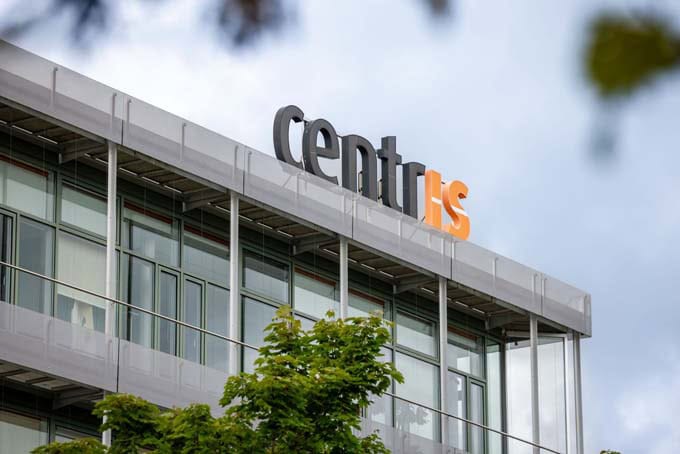
Sergio Pradera will take over as Chairman of the Board of Directors of Centris AG on March 1, 2026. (Source: Centris / zvg)
Sergio Pradera will take over as Chairman of the Board of Directors of Centris AG on March 1, 2026. The long-standing CEO of innova Versicherungen has extensive experience in the health and accident insurance industry as well as in corporate management and governance. He has been a member of the Centris Board of Directors for almost three years and knows the company inside out.
Schena shaped strategic development
Stefan Schena will end his mandate on February 28, 2026. During his tenure, he played a key role in shaping the strategic development of Centris. Under his leadership, agile structures were introduced, the product portfolio was consistently geared towards innovative, market-oriented solutions and key foundations for sustainable growth were laid. Today, the company is in an excellent position with stable business figures, a solid capital base and a clear strategic outlook.
Focus on digital transformation
With the appointment of Sergio Pradera, Centris is focusing on continuity in the implementation of the 2026 strategy phase. Pradera will continue to drive forward the digital transformation of the Swiss healthcare system. The strategic priorities include the further development of the product portfolio, the automation of processes and the opening of the ecosystem to new partners. The aim is to offer insurers and their customers more efficient, secure and flexible solutions and to further strengthen Centris' role as an innovation partner.
Centris AG employs around 340 specialists from the IT and insurance sector at its site in Solothurn. (Source: Centris / zvg)
The Board of Directors, the shareholders and the Executive Board would like to thank Stefan Schena for his great commitment and his valuable work for Centris.
In addition to innova Versicherungen, the shareholders of Centris AG include the health insurers Aquilana, ÖKK, EGK and Swica. Together, they form a solid foundation for the further development of the company and the strengthening of Switzerland's largest health insurance ecosystem.
With the largest health insurance ecosystem in Switzerland, Centris supports Swiss health and accident insurers in the digitalization of their business. The offering includes efficient and secure IT solutions ranging from individual applications to comprehensive overall systems for corporate and private customer business. Centris employs around 340 specialists from the IT and insurance sectors at its site in Solothurn. The company has a history stretching back over 75 years. Its customers include Allianz Suisse, Aquilana, Assura, AXA, Baloise, EGK, Generali, Helsana, Helvetia, innova, Die Mobiliar, ÖKK, Solida, Swica, Sympany, Vaudoise Versicherungen and the German livestock insurer Uelzener Versicherungen. In total, the Centris systems process the invoices of around half of all insured persons in the country.
Digital manufacturer Protolabs launches ProDesk, a new all-in-one platform. The online environment enables AI-supported real-time offerings including feasibility analysis, seamless cross-team collaboration and numerous tools to support prototyping and production projects.
Editorial - February 20, 2026
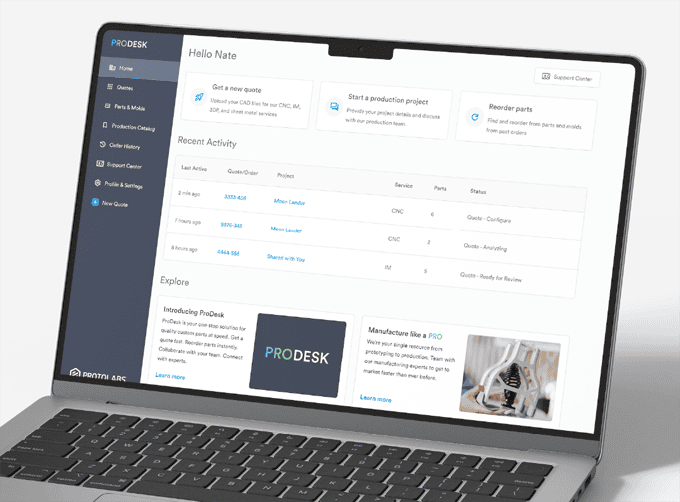
View of Protolabs' AI-supported manufacturing platform for prototype construction. (Image: Protolabs)
Digital manufacturer Protolabs announces the launch of its new all-in-one platform, ProDesk. The newly launched online environment enables AI-powered real-time quotes including Design for Manufacturability (DfM), seamless cross-team collaboration and a range of other tools that support prototyping and production projects, increasing the speed of innovation for product development and procurement teams.
«The introduction of ProDesk as an innovative manufacturing resource is critical to our ability to support our customers at every stage of a project, from prototyping to production,» said Suresh Krishna, President and CEO of Protolabs. «Accordingly, with this launch, we are pleased to present an online environment that underscores Protolabs» own claim as a technology-driven partner for high-quality parts."
Comprehensive services and support
ProDesk provides AI-powered DFM analysis for injection molding, CNC machining and 3D printing services to provide instant feedback on parts before they go into production. The configurable platform also includes the ability to provide real-time quotes for services such as material options, post-processing and surface treatments. Lead times can also be set, allowing users to customize quotes based on required lead time and budget.
ProDesk supports the entire product development process and also offers other benefits: In the platform, users can select components in the production catalog that have already been released for production. This makes it much easier to manage, organize and reorder parts at a later date.
Collaborative platform for greater efficiency
ProDesk is designed as a collaborative platform for all aspects of the ordering process. All quotations and orders can be shared across teams in order to be able to track order status and shipments at all times. Teams can share their own production catalogs in order to view the components they contain and reorder them if necessary, as well as to access the order history, documentation and part details.
The ProDesk Support Center serves as a central point of contact for all questions relating to orders, documents, invoices and quality documentation. This establishes direct communication with the experienced team of application engineers at Protolabs. The familiar option of design support and service-specific services with further information on feasibility analysis can be accessed here as usual.
ProDesk combines all of these functions in an interactive dashboard with real-time updates on current orders, providing the most important information at a glance immediately after logging in.
Experience the future of manufacturing now
«Throughout the entire process, it was crucial for us to create an online environment with ProDesk that revolutionizes collaboration with Protolabs for our customers and comprehensively modernizes it in key areas,» explains Mark Flannery, Global Product Director for E-Commerce at Protolabs. «For the 50,000 or so customers who will be accessing ProDesk this year, this means more than just a new interface. Rather, they will benefit from an industry-leading online experience that will provide key support in shortening product development times.»
Product developers, engineers and procurement teams can now access ProDesk via the Protolabs website and experience the new all-in-one platform first-hand.
Review of Swiss Cyber Security Days 2026: «Sovereign is he who knows his dependencies»
Under the motto «Digital Sovereignty - The New Frontier», the seventh edition of the Swiss Cyber Security Days took place on February 17 and 18, 2026 at the BERNEXPO site in Bern. National and international speakers provided answers to the most important digital questions of our time.
Editorial - February 20, 2026
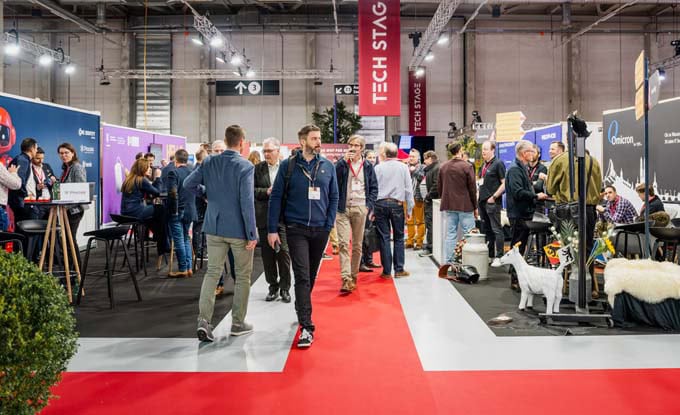
The Swiss Cyber Security Days SCSD attracted around 2800 visitors on February 17 and 18, 2026. (Image: Swiss Cyber Security Days)
On Tuesday, February 17 and Wednesday, February 18, 2026, the BERNEXPO site became the focal point of a debate on security, freedom and self-determination. For the third time in a row, the Swiss Cyber Security Days (SCSD), the leading platform on cyber security, took place in Bern and brought together national and international speakers in one place. With 2,800 visitors and over 100 exhibitors, the event built on last year's success. One highlight was the presentation by Florian Schütz, Director of the Federal Office for Cybersecurity (BACS), who gave an overview of the current cybersecurity situation in Switzerland and placed it in relation to the international environment. He also gave a few concrete figures: In 2025, for example, 2,347,618 reports of devices infected with malware were analyzed. Just over 17,000 command and control systems of attackers were identified and blocked. ’Economic damage caused by cyberattacks remains the greatest risk for Switzerland,’ said Schütz.
Digital sovereignty affects everyone
The event focused on the question of who determines the rules of the game in the new digital world and thus influences geopolitical, economic and social developments. However, the topic of digital sovereignty, which dominated this year's Swiss Cyber Security Days, is nothing new. In his keynote speech at the beginning of the event, Federal Chancellor Viktor Rossi pointed out that as early as 1999, the Confederation was already concerned about sovereignty and dependencies when using software products from large providers. Today, however, a complete departure from Microsoft systems is hardly realistic, but it must still be possible to place critical systems under one's own control, according to Viktor Rossi. Furthermore, digital sovereignty also consists of creating trust among the population that the authorities have the data under control. The narrow outcome of the vote on the e-ID showed just how difficult this is.
In his speech, Program Director Nicolas Mayencourt made it clear that digital sovereignty concerns everyone and that we must work together to develop future-oriented and secure solutions: «What unites us is a common goal: to make the cyber dimension secure, autonomous and sustainable. We need binding techno-social responsibility, supported by the state, the economy and the civilian population.» Nik Gugger, President of the SCSD, also addressed clear words to the attendees from politics and business in his opening speech: «Create reliable framework conditions and invest in digital sovereignty. Understand cyber resilience not as a cost factor, but as a competitive factor.» And Viktor Rossi said: «Sovereignty is knowing your dependencies».
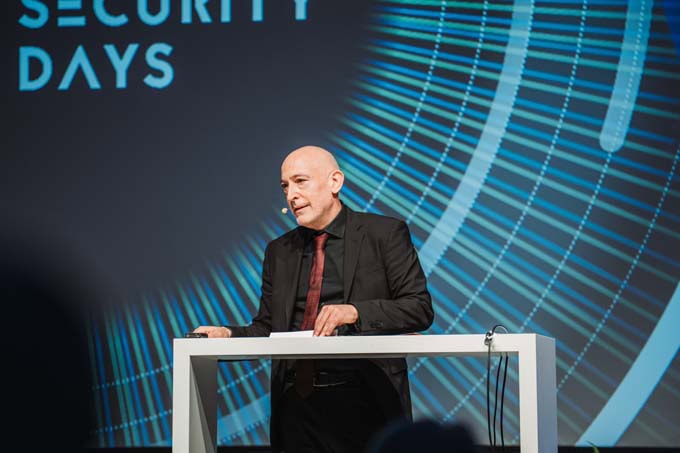
«We are voluntarily allowing ourselves to be colonized by a few hyperscalers»: Nicolas Mayencourt, Program Director of the SCSD. (Image: Swiss Cyber Security Days)
Switzerland is not on the sidetrack
The experts agreed on one point: Europe and Switzerland must strengthen their digital sovereignty and secure it in the long term. What this path should look like in concrete terms was the subject of lively and passionate discussion. One thing is clear: Europe's innovative strength must not be built exclusively on the value creation of non-European tech companies. The strong dependence on a few large providers is particularly evident in the cloud sector, as Dr. Cristina Caffarra from the EuroStack Initiative Foundation and one of Europe's leading experts in the field of digital sovereignty explained. She is convinced that Europe has sufficient technological strengths - these must now be consistently bundled and strategically deployed. «We must now make every effort to create what we have missed in the last 15 years,» said Cristina Caffarra at a media conference on the fringes of the SCSD. And when asked whether states should develop their own software, she replied: «The state should not be a competitor, but an enabler.»
Digital sovereignty is also being pursued in Switzerland, as Prof. Dr. Matthias Stürmer, Professor at Bern University of Applied Sciences & Head of the Institute for Public Sector Transformation, explained: «Switzerland is not on the sidetrack. There are great opportunities for digital sovereignty, but more courage is needed in strategic decisions.» What worries him, however, is the fact that the large US corporations are lobbying intensively and thus trying to thwart efforts to achieve digital sovereignty. This makes it all the more important to join forces. This is why the «SDS - Sovereign Digital Switzerland» network, an association of over 160 authorities and Swiss IT companies, was created to establish sustainable structures. The vision: to create a coordinated, efficient Swiss offering that offers practicable alternatives to international hyperscalers and strengthens digital independence.
Where digital sovereignty already works
There are already many prominent examples of organizations in Germany and abroad that are taking a concrete approach to digital sovereignty. The German federal state of Schleswig-Holstein, for example, has successfully converted its administration to open source software. The collaboration solution from Nextcloud is one of the tools used there. Its founder and CEO Frank Karlitschek was also a guest at the Swiss Cyber Security Days. In his keynote speech, he pointed out that even the EU General Data Protection Regulation (GDPR) cannot provide protection for European data stored on US servers. This means that a lot of data that is shared via Microsoft products, for example, is not GDPR-compliant. Karlitschek criticized the market power of US hyperscalers, which in many cases leads to a so-called vendor lock-in.
Panel discussion with Ueli Schmezer (moderator), Frank-Karlitschek (Founder and CEO Nextcloud), Cristina Caffarra (Chair EuroStack Initiative Foundation), Florian Schütz (Director Federal Office for Cyber Security) and René Oester (CEO Axpo Systems AG), from left to right (Image: Swiss Cyber Security Days)
A highlight was the subsequent panel with Cristina Caffarra and Florian Schütz, Director of the Federal Office for Cyber Security, Frank Karlitschek and René Oester from Axpo Systems AG. In this lively discussion, Frank Karlitschek backed the idea of «Buy Europe», which is intended to redirect money flows into the European economy. However, he also made it clear that software companies such as Nextcloud do not need economic policy support: «We need customers,» said Frank Karlitschek. He sees the EuroStack initiative represented by Cristina Caffarra as a way to achieve the goal of strengthening the European IT markets. Florian Schütz makes it clear that it is not a question of simply trying to replicate US hyperscalers in Europe. It would be better to promote the strengths of the European IT industry in specialized areas such as logistics. René Oester referred to the risk management of companies: There needs to be a better understanding of dependencies and work towards enabling business continuity management even without hyperscalers.
Satisfied exhibitors and organizers
The organizer BERNEXPO can look back on two thoroughly successful days. 2,800 visitors attended around 100 presentations and discussions and took the opportunity to engage in intensive discussions. The two Best Practice Stages were also very popular and offered practical insights and concrete experience reports. The newly created SME zone was aimed specifically at small and medium-sized enterprises: The focus was on success stories from everyday business life and a direct exchange with IT service providers. The workshops held by Lucerne University of Applied Sciences and Arts in the SME Lounge also met with particularly great interest. For example, the impact of the current Swiss laws on data protection and information security on SMEs was explained in a practical way.
Over 100 exhibitors presented their offerings in the exhibition area, creating ideal conditions for personal dialog and new partnerships. Swiss cyber security provider ELCASecurity and Senthorus SOC also appreciated the interdisciplinary exchange: «This is where strategic decision-makers meet technical experts, enabling us to think holistically about security architectures, present concrete solutions, deepen partnerships and work together with the community on a resilient digital future for Switzerland,» explains Christophe Gerber, General Manager, ELCASecurity. The next edition of the Swiss Cyber Security Days will take place on February 23 and 24, 2027 in Bern.
First, it's different: Google is setting the pace again
Anyone who thought Google's era was coming to an end will get a counter-argument in product form in 2026: Gemini 3, Veo 3, «Nano Banana» and AI Mode are pushing search, ads and commerce towards dialog-based search and agent-based shopping - with YouTube as the discovery engine.
Editorial - February 20, 2026
[caption id="attachment_251421" align="alignnone" width="1300"] Vidhya Srinivasan, Google Vice President/General Manager, Ads & Commerce (Images by Google)[/caption]
Within around a year, Google has made a visible change: AI is no longer a feature, but an operating system. Applications have sprung up like mushrooms - from Gemini 3 as a model basis to Veo 3 and «Nano Banana» in the Ads Asset Studio to AI Mode, which aims to turn search into a conversation. And this is exactly where the old adage fits: Firstly, things turn out differently, and secondly, than you think.
Vidhya Srinivasan, VP/GM Ads & Commerce, describes the target direction in three words in her 2026 outlook: «fluid, assistive and personal» - Shopping experiences should be fluid, supportive and personal. For advertisers, this means that ad formats, measurement and commerce logics are being rewired. And YouTube? Remains the place where discovery turns into a buying mood.
1) YouTube: From «Influence» to Impact - with AI as a matchmaker
Srinivasan's first major thesis plays on YouTube's home advantage: Discovery no longer only takes place in search, but in streaming. YouTube remains the lever for Google to translate attention into action - via creator ecosystems. The decisive twist in 2026: Google wants brands in real time with creator communities by using AI to analyze content and audiences in depth. «Open call» is the beginning - the goal is a systematic bridge from organic creator impact to measurable business impact.
2) AI Mode: Ads are not «faded in», but redefined
The second block is Google's answer to the new search reality: people brainstorm, take photos, ask questions in full sentences - and expect the machine to think for them. This is exactly where the AI Mode on. Google is testing advertising formats that under organic shopping recommendations appear as «Sponsored» - not as a disruption, but as a connection to the logic of the conversation.
At the same time, Google is positioning Direct Offers as a new monetization lever: tailor-made offers (discounts, bundles, loyalty benefits), played out at the moment of genuine willingness to buy.
3) Agentic commerce: when AI does the «grunt work»
This is where it becomes fundamental: by 2026, «agentic commerce» will no longer be an idea, but a reality, writes Srinivasan. The promise: AI agents will take over the tedious comparison and research work - and consumers will keep the fun part. To ensure that this doesn't get stuck with individual integrations, Google is bringing the Universal Commerce Protocol (UCP) comes into play: a kind of common language so that businesses, agents and payment systems can interact in a standardized way. According to Google, UCP Checkout is already being rolled out in the USA (including Etsy and Wayfair; Shopify, Target and Walmart are to follow) - directly in AI Mode and in the Gemini app.
4) Gemini 3, Veo 3, «Nano Banana»: creative pipeline in studio quality - in minutes
Srinivasan puts it in unusually offensive terms: Google has delivered «a decade of innovation in 12 months» - culminating in Gemini 3 as the most intelligent model to date. In advertising terms, this means: Asset Studio becomes a production line in which tools such as «Nano Banana» and Veo 3 image and video assets in minutes. The scaling document from the text: In Q4 2025, with Gemini almost 70 million creative assets generated in AI Max and Performance Max.
5) Measurability, trust, safety: the «fast lane» should remain the «safe lane»
Despite all the speed, Google puts the mandatory sentence at the end - but not as a footnote: the agent principle does not work without trust. That's why Google links UCP with the Agent Payments Protocol (AP2), which addresses secure identities, mandates/authorizations and payments for agent-driven transactions. At the same time, Srinivasan announces that the measurement stack is to be rebuilt as a «one-stop store» so that decisions can once again contribute more cleanly to growth.
Conclusion
In 2026, Google does not look like a company that manages its cash cow, but like one that rewrites its own rules of the gameSearch becomes a dialog area, ads become an integrated response mechanism, commerce becomes an agency chain of action - and YouTube remains the emotional ramp on which discovery happens before the shopping cart clicks. Nobody knows what is yet to come. But what is visible: Google holds the top position in advertising not despite AI - but with AI as an accelerator.
Online tool for assessing the digital sovereignty of companies
With the Red Hat Digital Sovereignty Readiness Assessment Tool, Red Hat has provided an online tool that helps companies to assess and improve their digital sovereignty.
Editorial - February 18, 2026
Sovereign clouds in companies: An online tool now allows companies to assess their own digital sovereignty. (Image: Depositphotos.com)
The provider of open source software solutions Red Hat has published a Sovereignty Readiness Assessment Tool. Based on a questionnaire, it provides clear information on how much control companies have over their digital assets. This is not only about control over data and software, but also about the ability to maintain and restore all systems without external help, to independently audit and validate their integrity, to avoid vendor lock-ins with community-driven approaches and to provide cloud environments flexibly in specific regions and data centers. In addition, the extent to which digital sovereignty is anchored in the corporate strategy is evaluated.
Once the analysis is complete, the tool determines a maturity level that classifies the capabilities of companies within four levels. The levels classify whether companies are still in the process of identifying their requirements in terms of digital sovereignty, have already taken the first steps, are already very well positioned in most areas or have comprehensive, proactive control over their entire digital infrastructure. The tool then creates a roadmap with sensible steps to improve digital sovereignty and critical questions that those responsible in companies should ask themselves.
With the Red Hat Sovereignty Readiness Assessment Tool, Red Hat is responding to the fact that many companies need to strengthen their resilience and independence due to regulatory requirements and must not relinquish sovereignty over data. However, they often face challenges such as opaque software stacks, limited options and fragmented data silos. The tool helps them to understand their IT environment, determine the status quo and initiate improvements. It has been published by Red Hat as open source so that it is clear how the calculations are performed and companies can check everything - and adapt or expand it if necessary.
Global country risks fall despite intense trade tensions
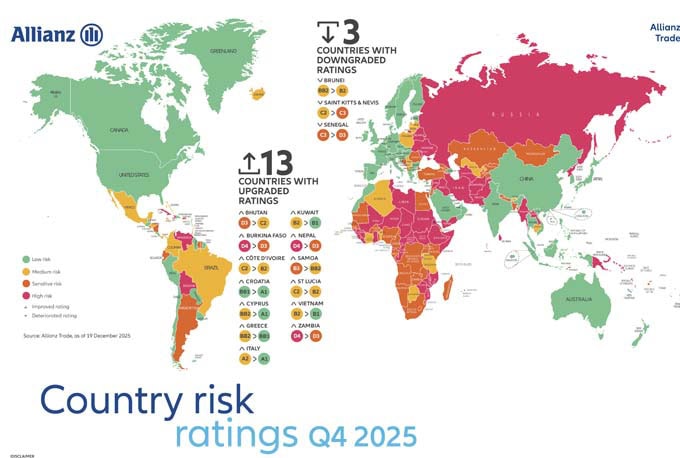
The credit insurer Allianz Trade has published its Country Risk Atlas for the third time. It assesses the economic prospects, risks and opportunities in 83 countries.
Editorial - February 17, 2026
The new map of country risks. (Source: Allianz Trade)
In its new Country Risk Atlas, Allianz Trade notes an easing of the global risk environment - despite high geopolitical tensions and trade conflicts. In 2025, 36 countries were upgraded, while only 14 were downgraded; the positive trend is therefore weaker than in the previous year, but remains intact. The winners include Argentina, Ecuador, Hungary, Italy, Spain, Turkey and Vietnam, whose improved ratings are primarily attributed to more robust macroeconomic fundamentals and supportive fiscal and monetary policies. In many emerging markets, better financing conditions, stronger currencies and higher commodity prices allowed for an easing of transfer and convertibility restrictions, while in Europe and the Asia-Pacific region, falling inflation, more stable policies and better trade balances increased resilience.
Tripling of downgrades compared to 2024
At the same time, the broad improvement masks considerable medium-term risks, particularly because the number of downgrades has almost tripled compared to 2024. The downgrades of France, Belgium and the USA, which are now each rated A1 and together represent a significant part of the global economy, are particularly significant. The risk there is still considered low, but the deterioration signals structural vulnerabilities - from strained public finances and current account deficits to a challenging medium-term macroeconomic environment. Allianz Head of Trade Aylin Somersan Coqui warns of risk clusters in large economies that account for around a third of global GDP, many times more than those countries where the outlook has improved.
Switzerland with low country risk
Switzerland has maintained its AA rating in this environment and thus remains a location with low country risk. Following a recovery in 2024 with growth of 1.4%, uncertainty over US trade policy and weaker investment were the main factors holding back growth in 2025, while a reduction in newly introduced US tariffs on Swiss goods negotiated in mid-November stabilized the outlook towards the end of the year. GDP grew by around 1.23% in 2025, driven by export-related pull-forward effects, but held back by subdued investment activity and subdued consumer sentiment; private consumption remained the mainstay, while government consumption is likely to grow only moderately due to austerity constraints. For 2026 and 2027, Allianz Trade expects growth of 1.4% and 1.6% respectively, while corporate insolvencies remain high: following an increase of 18% in 2024, insolvencies continued to rise in 2025 and are only expected to fall by 6% and 11% respectively in 2026 and 2027.
Meanwhile, inflation in Switzerland remains well below the SNB's target value. In 2024, it amounted to 1.1%, dampened by the strong franc and lower energy prices; in 2025, inflation was practically zero at 0.2%, supported by cheaper imports, low energy prices and lower rent increases. For 2026, Allianz Trade expects an inflation rate of 0.4% and a moderate increase to 0.7% in 2027, while the strong franc and low energy prices continue to have a disinflationary effect and the SNB is likely to leave its key interest rate at 0% throughout the forecast period.
Ambivalent picture for companies
From the companies' point of view, this creates an ambivalent picture: on the one hand, they are benefiting from an overall decline in country risks and more robust framework conditions in many markets, while on the other hand, the accumulation of downgrades in large economies is forcing them to take a much more selective, country-specific approach to risk management. Allianz Trade advocates a forward-looking approach that goes beyond the rating headline and continuously monitors transfer and convertibility risks, fiscal developments and trade policy risks in particular in order to identify turning points at an early stage and protect assets.